A Noisy Flock of Round Dusty Angels
The Films of Helen Hill
Thursday, August 2, 8:30 pm, The Quilt Barn
by Chris Gehman
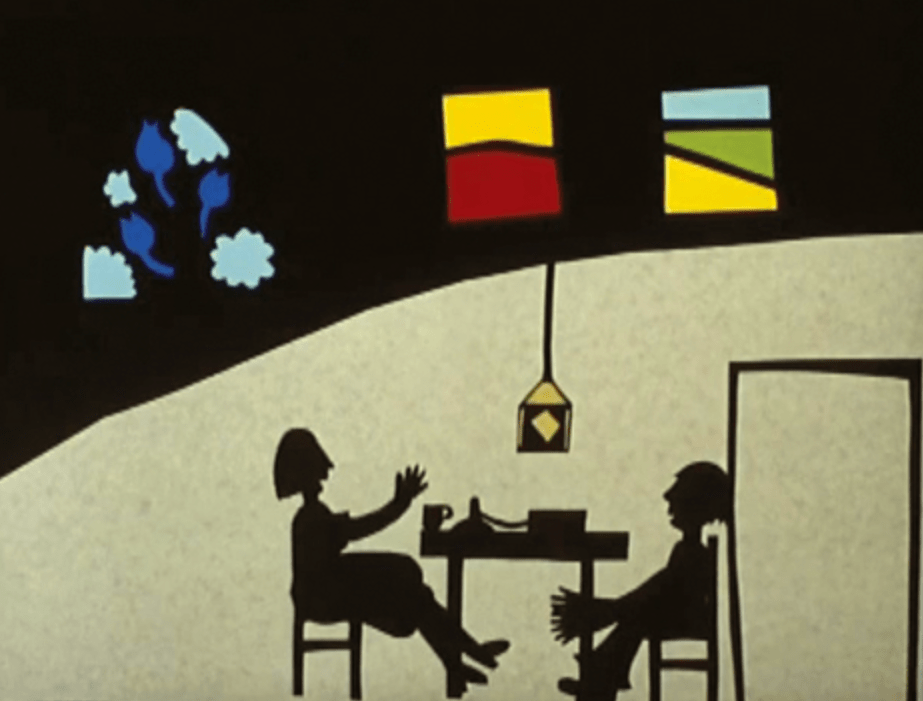
The Florestine Collection
When 36-year-old Helen Hill was murdered at the beginning of 2007, the event sent waves of shock and grief through her adopted home of New Orleans, which had been devastated first by the disaster of Hurricane Katrina and the failure of the state to protect its people, and afterwards by a terrible crime wave. The death of this generous, kind and unreservedly committed artist and activist, coming after a spate of other senseless crimes, incited the people of New Orleans to take to the streets by the thousands, in a historic March Against Violence. But losing Helen was also felt keenly across the continental independent film community, particularly in Halifax, where she had been an active member of the film community, and right here in southern Ontario, where she had made friends and established strong connections through her participation in Philip Hoffman’s Film Farm workshop in Mount Forest.
Born and raised in Columbia, South Carolina, Hill became a Canadian citizen after marrying Paul Gailiunas, a Canadian she met while the two were studying at Harvard University. The couple lived in New Orleans, in Los Angeles, where Hill completed an MFA at the California Institute of the Arts, and then in Halifax, where Gailiunas studied to become a doctor. In Halifax Hill taught animation at the Nova Scotia College of Art and Design, was a member of the Atlantic Filmmakers Co-op, and made several films. She and Gailiunas also helped to start a Free Food Organization there, which later became part of Food Not Bombs. In 1999 and 2000, Helen was a participant at the Independent Imaging Retreat (a.k.a. The Film Farm) in Mount Forest, Ontario, and this experience had a profound effect on her filmmaking, turning her more strongly toward artisanal, hand-made methods. After Gailiunas completed his medical training, the couple returned to New Orleans, where they continued to work as activists and artists; Hill became a founding member of the New Orleans Film Collective. Their son, Francis Pop, was born in 2004. The family lost a lot when their home was flooded during the Hurricane Katrina disaster in 2005, but they were returned to the city to help rebuild their community. Tragically, Hill was shot and killed by an intruder in her family’s home on January 4, 2007, and her murderer has never been found.
Helen Hill began doing animation as a child, and continued making personal, handcrafted films throughout her life. Hill’s animation made use of simple materials, such as cut-outs, photographs, drawings and objects, combining a tradition of artisanal animation that stretches back to the early animations of Emile Cohl and the silhouette films of Lotte Reiniger with a plain-spoken directness, an impish sense of humour, and a profound sense of empathy (which certainly extended to animals as well as people). Her films talk to us about life, death, and love, and her spirit shines in every one of them. In 2004 Hill was awarded a Rockefeller Foundation grant to make The Florestine Collection, and her CalArts student film Scratch and Crow (1995) has been preserved by US National Film Registry. She also published a practical DIY guide to hand-made film techniques called Recipes for Disaster: A Handcrafted Film Cookbooklet (2001, revised 2004). Many of Hill’s films have been preserved by the Harvard Film Archive, and the restoration of animation pioneer Lotte Reiniger’s 1957 film Helen LaBelle by the Deutsches Filminstitut was dedicated to Hill’s memory.
This program includes several of Hill’s finest films, among them The Florestine Collection, which she was working on when she died, and was completed posthumously by her husband Paul Gailunas.
 Fabulous Festival of Fringe Film