Kewekapawetan: Return After the Flood
Jennifer Dysart
The people of South Indian Lake Manitoba are slowly leaving behind a long period of social crisis brought on by the damming of their namesake lake in the 1970’s. The environmental devastation still exists, but the community returns to their original village site once a year for a gathering called ‘Kewekapawetan,’ meaning “going back” or “looking back” in the Cree language. Using archival film and personal photographs spanning 50 years, this film tells the story of this community’s success, demise, and recent efforts to improve their quality of life by teaching children traditional practices. The film also traces the filmmaker’s own disconnected personal history to this place.
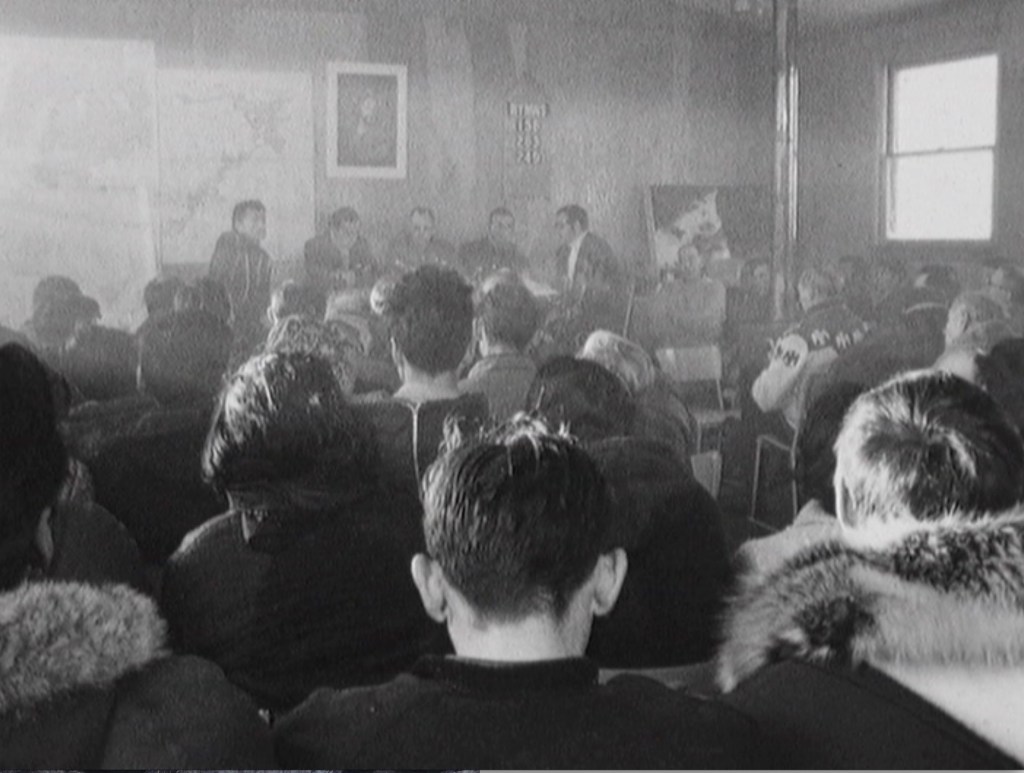
This film steps right back into the moment of cultural change, featuring rich black and white original footage from 1969 of the not-yet-flooded community. In this found footage, representatives of the Crown corporation called Manitoba Hydro are informing the primarily Cree-speaking audience at South Indian Lake of a coming flood of water that will drown their community. Knowledgeable fishermen speak up about the dangers of the proposal, and scientists and other experts try to fight the proposed massive hydro-electric project at public hearings. The 30 year period of social decline following these hearings is represented by a montage of decaying video footage shot by news crews in the 1980’s. The footage from 2008 focuses on the subtle gestures of the elders sharing their survival skills with children in the hopes that they will be able to find balance in their lives. This film is a reminder of what happens when we fail to take into account the long term effects of resource development on real people and fragile
Intimate film diaries interwoven with rich black and white archival film footage exploring the demise and ongoing struggles of a remote lakeside community affected by a large scale hydro-electric project in Canada’s north. The film also traces the film-maker’s own disconnected personal history to her Cree homeland where she has never resided. This story reminds us of the link between fragile ecosystems and healthy humans.
Les habitant·es de South Indian Lake, au Manitoba, émergent lentement d’une longue période de crise sociale provoquée par le barrage de leur lac homonyme dans les années 1970. Bien que les ravages environnementaux soient toujours présents, la communauté retourne chaque année sur son site d’origine pour un rassemblement appelé Kewekapawetan, signifiant « retour » ou « regard en arrière » en langue crie. En s’appuyant sur des images d’archives et des photographies personnelles couvrant 50 ans, ce film raconte l’histoire du succès, du déclin et des efforts récents de la communauté pour améliorer sa qualité de vie en enseignant les pratiques traditionnelles aux enfants. Le film retrace aussi l’histoire personnelle déconnectée de la réalisatrice avec ce lieu.
Ce film nous replonge dans un moment de basculement culturel, en présentant des images originales riches en noir et blanc de 1969, alors que la communauté n’était pas encore inondée. Dans ces documents retrouvés, des représentant·es de la société d’État Manitoba Hydro informent un auditoire principalement crie à South Indian Lake de l’arrivée imminente d’une inondation qui submergera leur village. Des pêcheurs expérimentés s’expriment sur les dangers du projet, tandis que des scientifiques et autres spécialistes tentent de s’y opposer lors d’audiences publiques. Les 30 années de déclin social qui ont suivi ces audiences sont représentées par un montage d’images vidéo dégradées tournées par des journalistes dans les années 1980. Les images de 2008 se concentrent sur les gestes discrets des aîné·es partageant leurs savoirs de survie avec les enfants, dans l’espoir qu’ils·elles puissent trouver un équilibre dans leur vie. Ce film est un rappel poignant des conséquences à long terme du développement des ressources sur les communautés humaines et les écosystèmes fragiles.
Des journaux filmiques intimes entrelacés avec de riches images d’archives en noir et blanc explorent le déclin et les luttes persistantes d’une communauté isolée en bord de lac, touchée par un vaste projet hydroélectrique dans le nord du Canada. Le film retrace également l’histoire personnelle fragmentée de la réalisatrice avec sa patrie crie, où elle n’a jamais résidé. Cette histoire nous rappelle le lien entre les écosystèmes fragiles et la santé humaine.
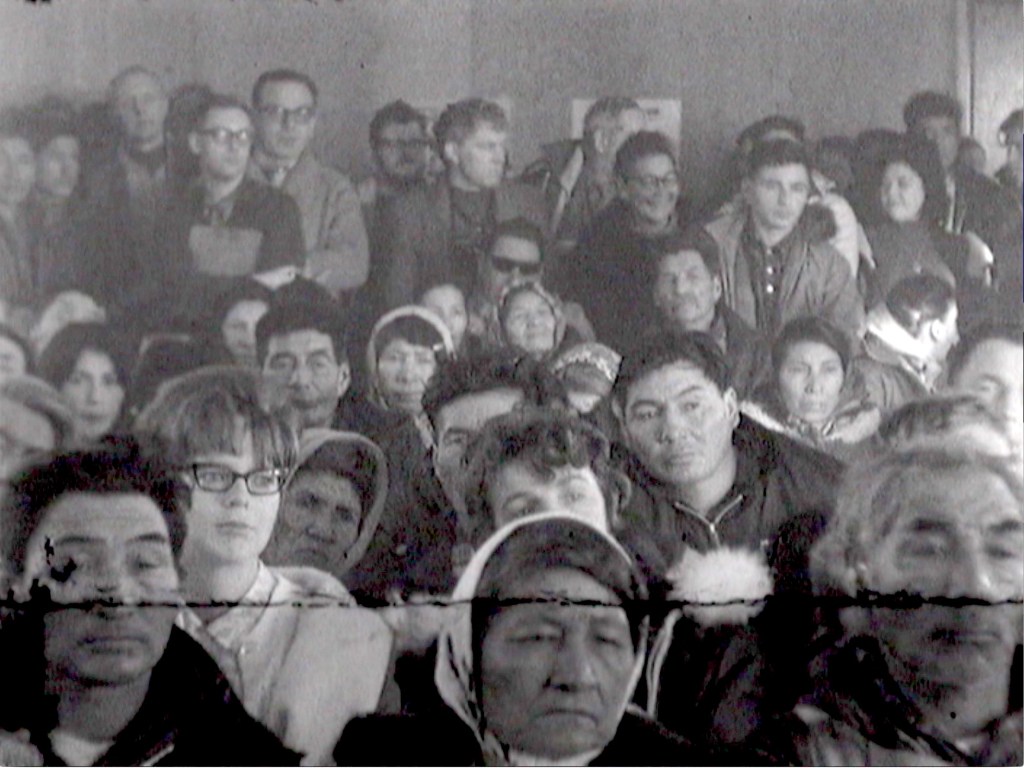
Lost Frame Faces, 1969.

Jennifer Dysart is an archive enthusiast, researcher, artist and filmmaker. Her film projects bring awareness of the importance of archives in the creation of memory while also representing a growing body of work that prioritises ethical research and interrupts the power of colonial archives. She was Artist-In-Residence for Archive/Counter-Archive at Library and Archives Canada (Ottawa, 2019) funded through SSHRC. In 2025 she is undertaking an artistic collaboration inspired by water in all its forms with Dr. Roewan Crowe. Jennifer was born in Alberta, raised in BC, currently lives in Hamilton, Ontario and has Cree roots on her Dad’s side of the family from South Indian Lake in northern Manitoba, Canada.
Jennifer Dysart est passionnée par les archives, chercheuse, artiste et cinéaste. Ses films soulignent l’importance des archives dans la construction de la mémoire, tout en constituant un corpus d’œuvres qui privilégie une recherche éthique et remet en question le pouvoir des archives coloniales. Elle a été artiste en résidence pour le projet Archive/Counter-Archive à Bibliothèque et Archives Canada (Ottawa, 2019), grâce à un financement du CRSH. En 2025, elle entreprend une collaboration artistique inspirée par l’eau sous toutes ses formes avec Dr. Roewan Crowe. Jennifer est née en Alberta, a grandi en Colombie-Britannique, vit actuellement à Hamilton, en Ontario, et a des origines Cree du côté de son père, provenant de South Indian Lake, dans le nord du Manitoba, au Canada.
This program is generously supported by Archive/Counter-Archive and The Film Farm.
Ce programme est généreusement soutenu par Archive/Counter-Archive et The Film Farm.

 Fabulous Festival of Fringe Film