Always Ours
Curated by Elwood Jimmy and jes sachse
Friday, July 28, 2017, 5pm @ The Garafraxa Cafe

How to Steal a Canoe, Amanda Strong. 2016
Over the past year, as both collaborators and friends, we have shared and discussed several ideas around our mutual interests and passions. A significant connective tissue to these conversations is the body. We talk and think a lot about accessibility, about movement, about navigation, about dancing, about voice, about resisting and confronting dominant structures that actively seeks the marginalization and erasure of particular bodies. We think deeply about self-care, self-preservation, and self-determination for the bodies we inhabit, for the communities we are members of, and for the individual narratives and collective histories we hold within our bodies. The work we do is an extension of our bodies as vessels. Within our own individual practices, there is an underlying current of building and holding space for a myriad of truths, experiences, stories, reactions, revelations, reflections, and at times, difficult conversations.
We host this screening in 2017, a marker of time that means many things to many people. For some it marks the 150th anniversary of something we now refer to as Canada. For some it marks a time of a process and discourse we refer to as Truth and Reconciliation. We mention these two concepts for a context, not to center them within our process. It’s quite the contrary. Both of those structures are inadequate containers for holding the breadth of languages, knowledge, history, stories, experiences, love, magic, trauma, of the bodies and beings of this landscape. It’s like trying to hold an ocean in a coffee cup. If 2017 functions a marker of time for us, then it is a time where we recognized that we were a blip on an infinite timeline, where we worked collaboratively to dismantle the containers that didn’t work for us – that exclude us, that don’t hold us, or kindly, tenderly and highly regard and carry us – and co-design and build new ones, largely through a process of de-centering and re-centering.
What does the new container/structure look like? We don’t have a definitive answer for that. Nor would we want to have one. But we humbly submit with this platform offered to us, a selection of voices who think deeply, lovingly, radically, tenderly, inclusively, and innovatively about what this structure – this nascent space – should and could look like. It is designed by Indigenous women and 2 Spirit peoples. It holds the spectrum of our stories, our trauma, our love, our spirits. It privileges a diverse relationship with time, with space, with the land, with the universe, with magic. It is inclusive of all the beings that we share this world with. It privileges poetry, music, and laughter. It honors gender diversity and is sex-positive. It re-centers all that was relegated to myth when the colonial complex was implemented. It is governed and nourished by the land. It is many languages. It is simultaneously ancient and contemporary. It is always ours to dream and to embody.

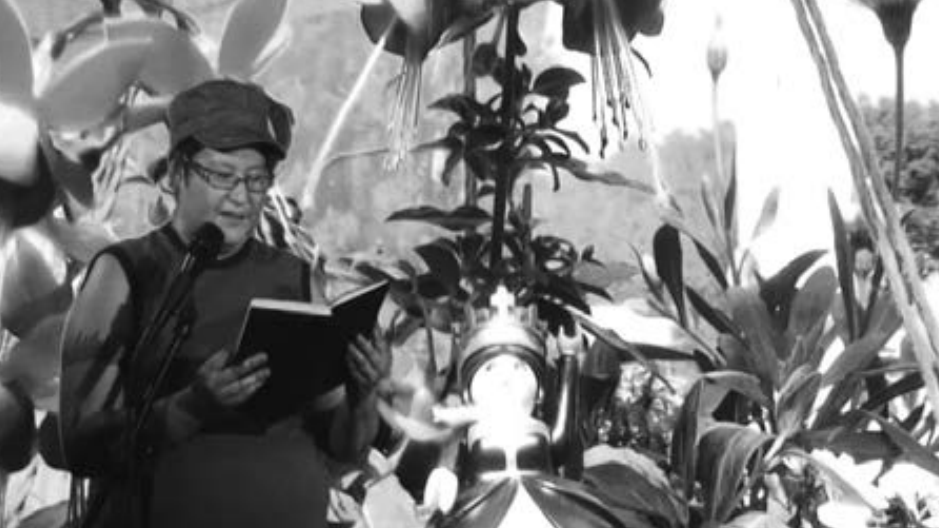
MICRO COMEDIES MACRO TRAGEDIES
jes sachse, 2016, 4 MIN What does it mean to be happy? What does it meme to be happy? Micro Comedies, Macro Tragedies is a poetic meditation on the reliance on screen-based technologies to mediate sadness when those technologies are often at the root of uncomfortable feelings. In light of this contradiction, Micro Comedies, Macro Tragedies proposes a nontechnological perseverance as a means of existing otherwise. Captions throughout are sourced from a conversation between Louis CK and Conan O’Brien on the topic of true happiness.
SIGHT
THIRZA CUTHAND, 2012, 4 MIN
Super 8 footage layered with Sharpie marked lines and circles obscuring the image illustrates the story of the filmmaker’s experience with temporary episodes of migraine related
blindness and her cousin’s self-induced blindness later in life. Paralleling the experience
of Blindness with Mental Illness, Cuthand deftly elucidates that any of us could lose any of
our abilities at any time.
IT’S NOT YOUR FAULT
RAVEN DAVIS, 2015, 4 MIN
It’s Not Your Fault is a short movie about the violence of online comments made towards Indigenous people, specifically Indigenous Women, children and 2 Spirit people. Bringing attention to the negligence of online/social media outlets allowing hate speech in Canada.
WOMB
FALLON SIMARD, 2016, 2 MIN
Womb functions as the interior view of a uterus and examines what it means to begin nation building, and further, what Indigenous women and Two Spirit peoples are doing already to build their nations.
SWEAT
KRISTIN SNOWBIRD, 2016, 4 MIN
A sweat lodge ceremony cannot be documented. In this film, I recreate my experience and what brought me to the sweat lodge with a metaphorical and poetic interpretation of this beautiful ceremony.
HAND DRUMS
LOUIS-PHILLIP MOAR, 2014, 3 MIN
Hand Drums is the story of the Red Rockerz who go to the studio to record their new song.
I STILL BELIEVE
RAVEN DAVIS, 2015, 3 MIN
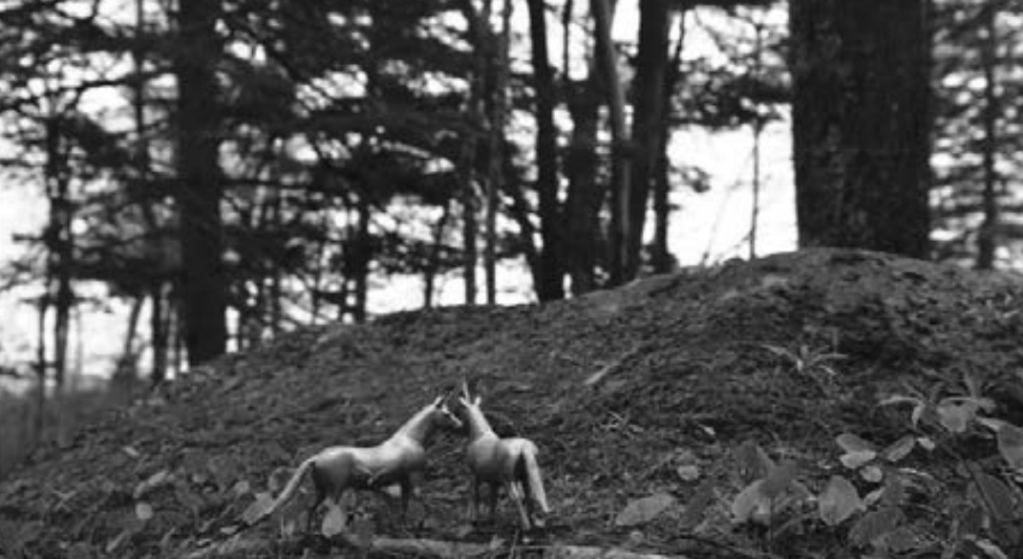
As a child, I believed unicorns were real and as I grew, I believed love was also real. Like unicorns, the idea of love has been this humbling journey that shifts, transforms into different realms that have been both painful and beautiful and as such, my fascination and hope with unicorns and love still remains one I cherish profoundly
JUST DANDY
THIRZA CUTHAND, 2013, 8 MIN
Invited to speak at an Indigenous Revolutionary Meeting, the narrator describes an intimate encounter with an Evil Colonizing Queen which leads to Turtle Island’s contraction of an invasive European flora.
RETURNING
ELIZABETH LAPENSÉE, 2015, 4 MIN
Stories of space canoes and space/time travel across dimensions unravel to “Trade Song” by the Métis Fiddler Quartet in the experimental stop motion
HOW TO STEAL A CANOE
AMANDA STRONG, 2016, 5 MIN
How to Steal A Canoe is a song telling, on one hand telling the story of a young Nishnaabeg woman and an old Nishnaabeg man rescuing a canoe from a museum and returning it to the lake it was meant to be with, and on a deeper level, of stealing back the precious parts of us, that were always ours in the first place. The spoken lyrics are by Nishnaabeg poet Leanne Betasamosake Simpson, and the original score is by Cree cellist Cris Derksen.
THE OLDEST TREE IN THE WORLD
CARA MUMFORD + LEANNE SIMPSON, 2017, 5 MIN
“The Oldest Tree in the World” is a love song to the oldest sugar maple in the region, living just outside of Peterborough in Mark S. Burnham Provincial Park. This grandmother tree, one of our oldest living relations, has witnessed over 500 years of history.
 Fabulous Festival of Fringe Film